Introduction
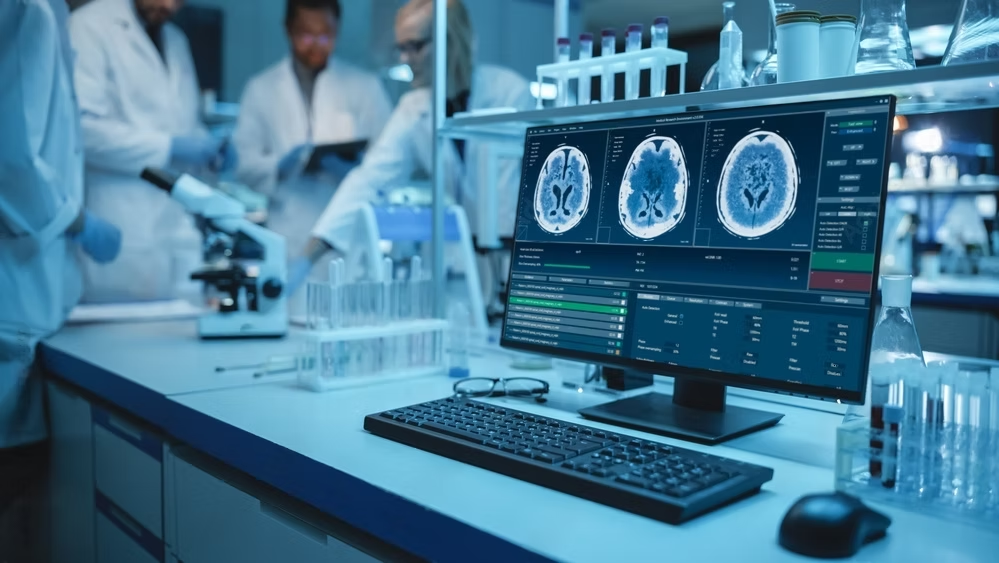
Pathology has always been at the forefront of medical diagnostics, providing crucial insights into diseases at the microscopic level. However, with the advent of spatial biology and artificial intelligence (AI), the field is undergoing a transformative shift. By integrating spatial analysis with AI-driven computational techniques, researchers and clinicians can now decode complex tissue architectures and cellular interactions with unprecedented accuracy. This fusion is paving the way for more precise diagnostics, personalized treatments, and groundbreaking discoveries in disease pathology.
Understanding Spatial Biology in Pathology
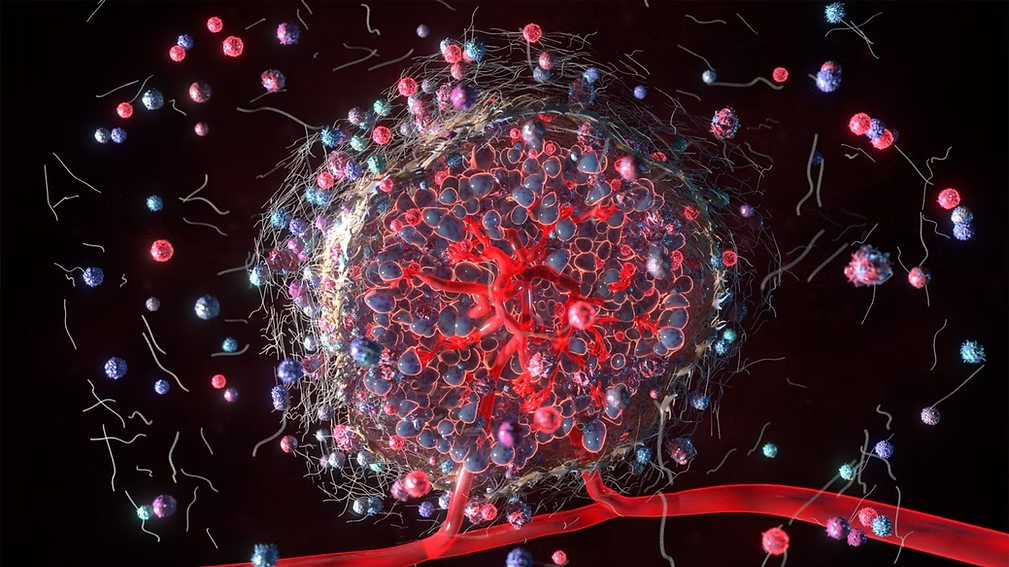
Spatial biology focuses on understanding the spatial organization of cells within tissues and how these structures influence biological functions and diseases. Unlike traditional histology, which primarily relies on stained slides and subjective interpretation, spatial biology provides a multidimensional view of tissue microenvironments.
Key aspects include:
- Spatial transcriptomics: Studying gene expression patterns within tissue samples.
- Multiplex imaging: Capturing multiple molecular markers in a single tissue section.
- AI-powered analysis: Extracting meaningful patterns from vast biological datasets.
How AI is Enhancing Spatial Biology
The combination of AI with spatial biology is revolutionizing pathology by:
- Automating Image Analysis: AI algorithms can rapidly process high-resolution tissue images, reducing human error and increasing efficiency.
- Identifying Hidden Patterns: Machine learning models can detect subtle histopathological changes that may be missed by the human eye.
- Predicting Disease Outcomes: AI-powered predictive models can help forecast disease progression and response to treatment based on spatial data.
Real-World Applications in Cancer Research and Precision Medicine
- Cancer Diagnosis: AI-driven spatial biology enables pathologists to differentiate between cancerous and non-cancerous cells with high precision.
- Drug Development: Pharmaceutical companies use spatial biology to understand how drugs interact with specific tissue environments.
- Personalized Medicine: AI-assisted spatial analysis helps in tailoring treatments based on a patient’s unique tissue composition and genetic profile.
The Future of AI-Driven Pathology
With continuous advancements in computational pathology, AI and spatial biology will further enhance diagnostic capabilities, enabling earlier disease detection and improved treatment strategies. As more datasets become available, deep learning models will refine their accuracy, eventually leading to fully automated pathology workflows that enhance efficiency and clinical outcomes.