Introduction
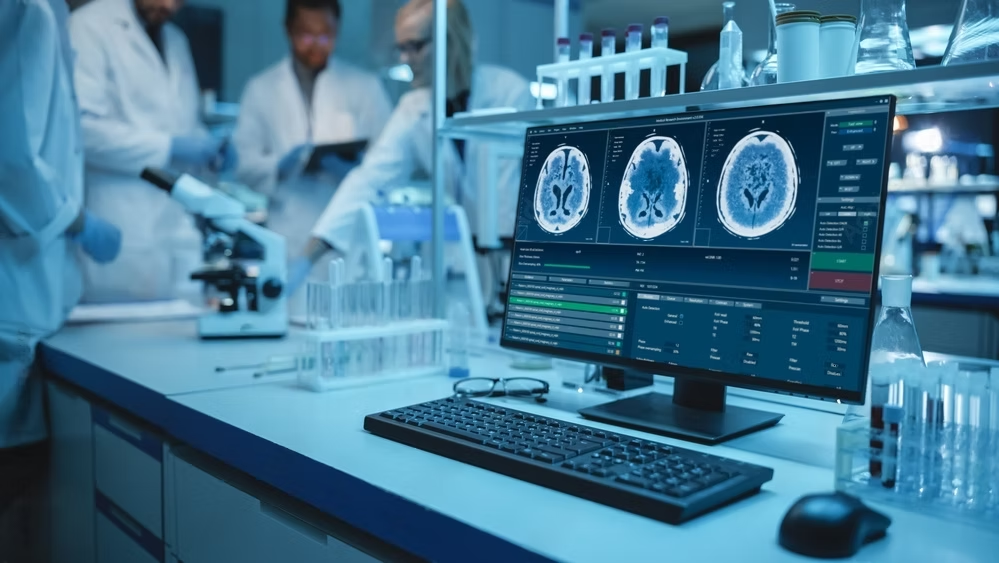
The shift from traditional pathology to digital pathology represents a significant leap in how medical professionals analyze tissue samples and educate future pathologists. Digital pathology leverages AI, computational tools, and high-resolution imaging to streamline diagnostics, improve collaboration, and enhance pathology education. This transition is empowering medical institutions and professionals with advanced tools to diagnose diseases faster and with greater accuracy.
The Evolution of Pathology: From Glass Slides to Digital Platforms
Historically, pathology relied on physical glass slides, microscopes, and manual interpretations. While effective, this approach was limited by subjectivity, accessibility, and efficiency. Digital pathology solves these challenges by:
- Digitizing Slide Images: High-resolution scanners convert traditional slides into digital files, enabling pathologists to access and analyze them remotely.
- AI-Driven Insights: Machine learning algorithms assist in detecting abnormalities, reducing diagnostic errors.
- Cloud-Based Data Sharing: Enables collaboration between pathologists across the globe.
Role of AI and Computational Tools in Pathology Education
The integration of AI and computational tools into pathology education is transforming the learning experience for medical students and professionals:
- Automated Image Annotation: AI highlights key regions of interest in tissue samples, helping students learn pattern recognition more efficiently.
- Virtual Microscopy: Students can examine digital slides remotely, eliminating the need for physical specimens.
- Interactive Learning Platforms: AI-powered software offers real-time feedback on diagnostic assessments.
Benefits of Digital Pathology in Diagnostics
- Remote Diagnosis: Digital pathology enables telepathology, allowing experts to provide consultations from anywhere in the world.
- Increased Efficiency: Automated image analysis speeds up workflows, reducing the time needed for diagnoses.
- Enhanced Accuracy: AI-driven tools help pathologists detect subtle histological changes with greater precision.
Future Trends in Digital Pathology
As AI and deep learning models continue to evolve, digital pathology will become even more sophisticated. Future advancements may include:
- AI-Powered Predictive Diagnostics: Identifying disease risks before symptoms appear.
- Automated Histopathology Reports: Generating detailed, AI-assisted pathology reports for clinicians.
- Integration with Wearable Health Data: Using AI to correlate pathology findings with patient health records for holistic disease management.
Conclusion
Digital pathology is revolutionizing both medical education and clinical diagnostics. With AI-driven automation, remote accessibility, and enhanced accuracy, the field is poised to become a cornerstone of modern medicine. As technology continues to advance, digital pathology will play an even greater role in improving patient outcomes and training the next generation of pathologists.